
The MTSS Framework and Literacy Planning at the Secondary Level
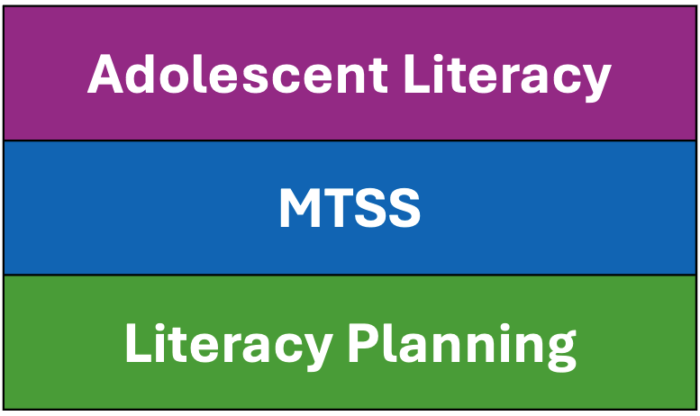
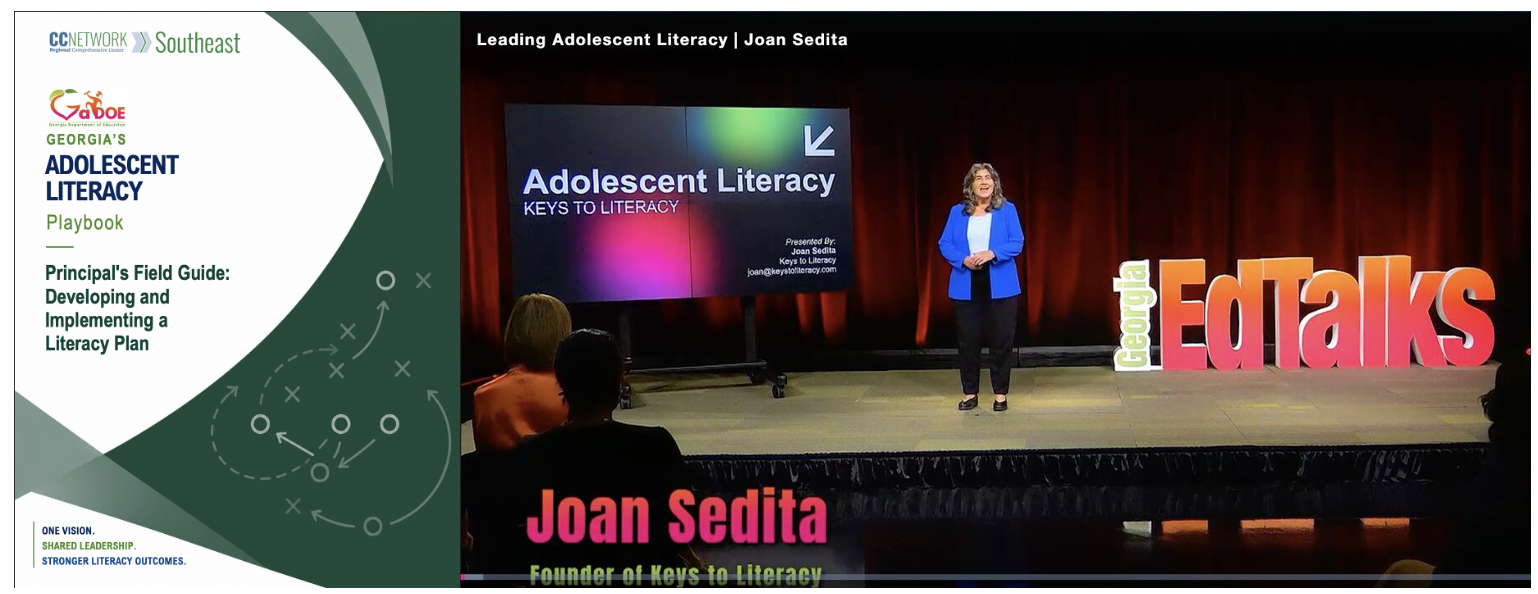
I’ve been thinking a lot about adolescent literacy recently, partly because the topic is finally receiving increased attention within the literacy community and partly because I have been working on several projects related to literacy planning and leadership at the secondary level. These include projects with the Georgia Department of Education, such as the development of Georgia’s Adolescent Literacy Playbook: Leadership Guidance for Grades 4–12, an EdTalk on adolescent literacy, and a keynote address I gave last week at Georgia’s annual curriculum directors conference on adolescent literacy leadership.
The Keys to Literacy Planning Model was featured in the Georgia guide. I also summarized the model in my December 2025 blog post titled Middle and High School: Schoolwide Literacy Planning. The model identifies six key components that should drive an adolescent literacy plan: Literacy Leadership, Universal Core Instruction, Intervention Support and Instruction, Assessment and Data Use, Professional Learning, and Literacy Resources.
These same components are important when addressing literacy achievement within a multi-tiered system of supports (MTSS) framework. The MTSS framework emphasizes several critical elements that contribute to positive student literacy outcomes, including effective leadership and teaming, capacity building and infrastructure, communication and collaboration, and assessment and data-based decision making. Educators use assessment data to identify student needs, determine appropriate levels of support across tiers, monitor students’ responses to instruction and intervention, and adjust support as needed (Capin et al., 2024; Center on Multi-Tiered System of Support, n.d-a.; National Center on Improving Literacy, n.d.; St. Martin et al., 2024; Stollar & Brown, 2025).
Stollar and Brown (2025) describe the value of incorporating an MTSS framework into a literacy initiative focused on reading. Although their discussion focuses specifically on reading, the framework can be applied more broadly to other components of literacy, including writing, speaking, and listening:
A multitiered system of supports (MTSS) offers a framework for implementing science-aligned reading instruction in a way that fits and even improves the system in which every student is learning to read. MTSS is a preventative framework in which schools use data to allocate resources to support all educators and students. It drives systemwide improved reading instruction that takes the science behind system change into account. (pp. 2–3)
Tiers of Instruction
Within an MTSS framework, students’ literacy needs are addressed across multiple tiers of instruction and support. The literacy needs of most students should be met through high-quality Tier 1 instruction across content areas. Without effective core instruction, significant numbers of students may require supplemental or intensive intervention at Tiers 2 and 3. The intensity of intervention increases in response to students’ instructional needs, and implementation is monitored to ensure that interventions are delivered with a high degree of fidelity. Students do not need an Individualized Education Program (IEP) to receive Tier 2 or Tier 3 support, and they may move in and out of tiers as their needs change.The three tiers and their application in secondary schools are described below (Sedita, 2026).
Three Tiers of Literacy Instruction: Secondary Grades
1. Tier 1: Universal, core reading instruction is provided to all students using evidence-based practices and programs. Teachers incorporate differentiation and scaffolds into core instruction to support students who struggle.
In middle and high school, Tier 1 instruction focuses primarily on grade-level vocabulary, comprehension, and writing and is integrated across content areas.
2. Tier 2: Supplemental instruction is provided in addition to Tier 1 for students who do not yet demonstrate grade-level literacy skills. This targeted instruction addresses students’ specific needs and may be delivered within the regular classroom or in a pull-out setting. The goal of Tier 2 is to provide temporary, additional support to address identified skill gaps.
In middle and high school, students who are one to two years below grade level in reading typically require Tier 2 support. These students benefit from explicit instruction and guided practice in vocabulary, comprehension, and strategies for reading multisyllabic words. If students do not make adequate progress, they may require more intensive intervention at Tier 3.
3. Tier 3: Intensive intervention is provided for students who have not responded sufficiently to Tier 2 support. Tier 3 intervention is typically more intensive and individualized than Tier 2 support and may be provided for a longer duration. It is usually delivered in a pull-out setting.
In middle and high school, students who are two or more years below grade level in reading often require Tier 3 support. Instruction is highly explicit, includes extensive guided practice, and may address any component of reading—including phonics and fluency—based on each student’s identified needs.
Assessment
 Assessment is integral to all tiers of MTSS. Screening identifies students who may be at risk; diagnostic assessment helps determine the specific nature of their literacy difficulties; and progress monitoring determines whether interventions are effective and whether their intensity should be adjusted. Rather than functioning as a separate activity, assessment is part of the ongoing cycle of instruction, intervention, and decision making that is central to MTSS. A screening and diagnostic assessment model is described in a post I wrote in November, 2024 titled Reading Assessment Model, Grades 5-12.
MTSS and Literacy Planning: Mutually Reinforcing Efforts
The components of a comprehensive literacy plan for organizing, implementing, and sustaining literacy improvement align closely with the elements of an MTSS framework. Schools that are successfully implementing MTSS can build on their existing systems and structures when developing a literacy plan. Likewise, developing a comprehensive literacy plan can strengthen a school’s use of MTSS to support literacy achievement. In this way, literacy planning and MTSS are mutually reinforcing efforts.
Both MTSS and comprehensive literacy planning extend beyond identifying and supporting students who struggle with reading and writing. Their systems-based approaches encourage schools to strengthen the instructional, organizational, and implementation conditions needed to improve literacy achievement for all students.
Secondary MTSS Challenges
The essential components of MTSS are applicable at the secondary level (Capin et al., 2024; Center on Multi-Tiered System of Supports, n.d.-b). However, how these components are translated into practice and integrated into school processes differs from their implementation at the elementary level. Middle and high schools have unique contextual factors that must be considered, including school size, organizational structure and culture, and the age and developmental needs of students.
A review of the literature on MTSS (Durrance, 2025) found relatively few resources addressing the specific challenges and complexities of implementation in middle and high schools. Interviews with secondary school and district staff conducted from 2021 through 2024 identified two main categories of barriers to MTSS implementation (Durrance, 2025, p. 4):
- Logistical and material challenges: Scheduling time for intervention; staffing intervention groups; finding space for intervention groups to meet; and identifying evidence-based interventions designed for secondary students.
- Infrastructure challenges: Fostering a school culture focused on prevention; addressing the departmentalized structure of secondary schools; building teachers’ knowledge of strategies for strengthening core instruction and supporting students within the classroom; establishing MTSS team structures; and managing student data efficiently.
For these reasons, MTSS models at the secondary level differ from those used in elementary schools in several important ways, as outlined below (Kamil et al., 2008; Reed et al., 2012; Vaughn & Fletcher, 2010; Vaughn et al., 2022). MTSS and literacy planning both take a systems-based approach and address many of the same components. Therefore, the differences between elementary and secondary settings—and the challenges middle and high schools face when implementing MTSS—are similar to those literacy leadership teams encounter when developing and implementing comprehensive literacy plans at the secondary level.
Differences Between Elementary and Secondary MTSS
Upper Elementary: Grades 4 and 5
Although many students in Grades 4 and 5 continue to require instruction in foundational reading skills, including phonics, advanced word study, and fluency, these grades represent an important transition. Literacy demands increasingly resemble those of middle school, and students may receive instruction from multiple teachers across subject areas. As a result, MTSS in Grades 4 and 5 differs somewhat from its application in Grades K–3 but does not yet present the same scheduling and organizational challenges found at the secondary level.
Schools typically continue to provide a dedicated literacy block, and students often spend much of the day in the same classroom with the same teacher. This structure makes it possible to provide some Tier 2 support within the regular classroom. For example, a teacher may provide targeted small-group instruction to students who need additional support while other students work independently or in groups. Tier 3 intervention is typically provided outside the regular classroom during a designated intervention period or other scheduled time and may be delivered by an interventionist or other specialist.
Middle School and High School
Proficient readers in middle and high school typically no longer need instruction in foundational reading skills. Instruction in these skills is therefore provided primarily through targeted intervention for struggling readers with unresolved difficulties in decoding, word recognition, and fluency.
Secondary schools often serve larger student bodies, students have multiple teachers, and school structures present greater challenges for providing Tier 2 and Tier 3 services and moving students between levels of support (Capin et al., 2024). Scheduling can be particularly challenging because of departmentalized schedules, competing demands for instructional time, and limited staffing resources. At the high school level, graduation requirements can further complicate intervention scheduling.
A strong Tier 1 literacy foundation is especially important at the secondary level. Literacy instruction should be integrated across subject areas, with content-area teachers prepared to differentiate instruction and provide appropriate scaffolds for students with below-grade-level reading and writing skills. Strong Tier 1 instruction can help limit the number of students who require supplemental or intensive intervention.
Additional considerations for secondary schools include:
- Intervention instruction. Students who require additional literacy support typically receive it during a designated intervention period, support class, or other scheduled time. At the secondary level, Tier 2 and Tier 3 may address many of the same reading and writing components and use the same evidence-based, explicit instructional practices. The primary distinction is the intensity of instruction, which may be increased through smaller groups, additional instructional time, greater individualization, more explicit instruction and practice, and more frequent progress monitoring. Tier 2 support may be provided in a specialized class or intervention period, often in relatively small groups, to address identified gaps in reading and writing skills. Tier 3 is reserved for students who require more intensive and individualized intervention than can be provided through Tier 2 support (Capin et al., 2024).
- Availability of literacy support. Secondary schools often have fewer personnel dedicated specifically to literacy intervention and support. Elementary schools are more likely to have literacy specialists, literacy coaches, and other support personnel, such as speech-language pathologists, available to support students and teachers.
- Collaboration across staff. At the elementary level, a classroom teacher can often collaborate with a relatively small number of literacy specialists or coaches to determine a student’s intervention needs. At the secondary level, multiple teachers across departments work with the same students, making coordination and communication more complex.
- Course credit and scheduling. At the high school level, intervention may need to be offered as a credit-bearing course. High schools must also balance the need for literacy intervention with students’ access to required courses, grade-level content, electives, and credits needed for graduation.
- Student developmental needs. Adolescents are navigating identity development and peer relationships and may be more reluctant to participate in intervention delivered in a specialized setting.
References
- Capin, P., Hall, C., Stevens, E. A., Steinle, P. K., & Murray, C. S. (2024). Evidence-based reading instruction for secondary students with reading difficulties within multitiered systems of support. TEACHING Exceptional Children, 56(5), 370–385. https://doi.org/10.1177/00400599221079643
- Center on Multi-Tiered System of Supports. (n.d.-a). Essential components of MTSS. American Institutes for Research. https://mtss4success.org/essential-components
- Center on Multi-Tiered System of Supports. (n.d.-b). Secondary schools. American Institutes for Research. https://mtss4success.org/special-topics/secondary-schools
- Durrance, S. (2025). Implementing MTSS in Secondary Schools: Strategies from Research and the Field. Greensboro, NC: SERVE at UNC Greensboro. https://serve.uncg.edu/wp-content/uploads/2025/03/MTSS-Strategies-and-Resources-Reference-Updates_Final_2.2025.pdf
- Kamil, M. L., Borman, G. D., Dole, J., Kral, C. C., Salinger, T., & Torgesen, J. (2008). Improving adolescent literacy: Effective classroom and intervention practices. National Center for Education Evaluation and Regional Assistance, Institute of Education Sciences, U.S. Department of Education.
- National Center on Improving Literacy. (n.d.). MTSS-R Implementation guide. https://improvingliteracy.org/tool/mtss-r-implementation-guide/
- Reed, D. K., Wexler, J., & Vaughn, S. (2012). RTI for reading at the secondary level: Recommended literacy practices and remaining questions. The Guilford Press.
- Sedita, J. (2026). Essentials of adolescent literacy: Integrating evidence-based reading and writing instruction in Grades 5-12. Paul H. Brookes Publishing Co.
- St. Martin, K., Vaughn, S., Troia, G., Fien, H., & Coyne, M. (2024). Intensifying literacy instruction: Essential practices, Version 2.1. Lansing, MI: MiMTSS Technical Assistance Center, Michigan Department of Education.
- Stollar, S., & Brown, A. (2025). MTSS for Reading Improvement. Solution Tree Press.
- Vaughn, S., & Fletcher, J. M. (2010). Thoughts on rethinking response to intervention with secondary students. School Psychology Review, 39(2), 296–299.
- Vaughn, S., Gersten, R., Dimino, J., et al. (2022). Providing reading interventions for students in grades 4–9. What Works Clearinghouse, Institute of Education Sciences, U.S. Department of Education.
Joan Sedita
 Joan Sedita is the founder of Keys to Literacy and author of the Keys to Literacy professional development programs. She is an experienced educator, nationally recognized speaker and teacher trainer. She has worked for over 35 years in the literacy education field and has presented to thousands of teachers and related professionals at schools, colleges, clinics, and professional conferences.
Leave a Reply