
Higher Education: Preparing Educators to Teach Literacy
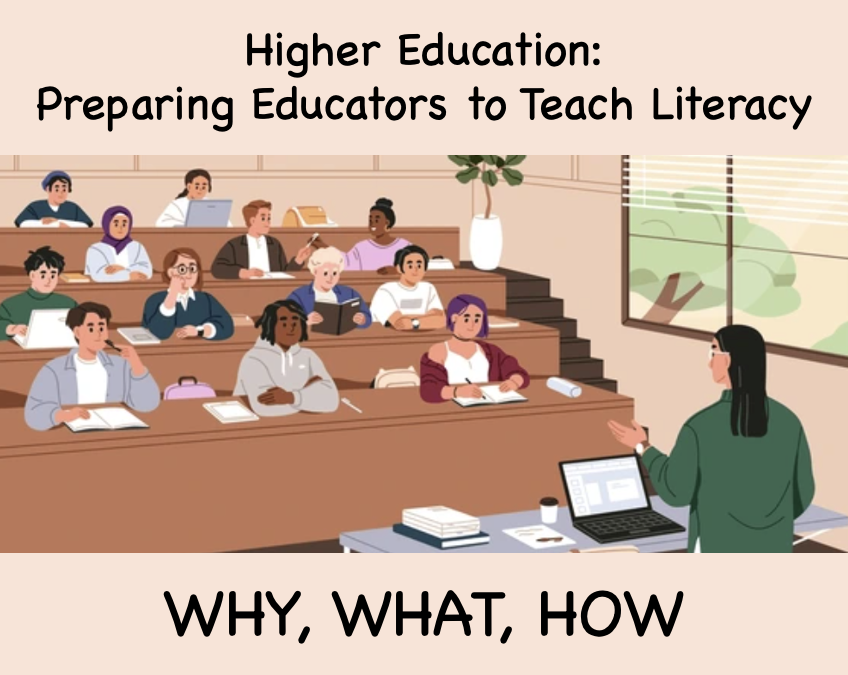
Few topics in literacy education are receiving more attention today than how colleges and universities prepare future teachers to teach reading and writing. As the Science of Reading continues to influence state legislation, teacher licensure requirements, and school district expectations, Educator Preparation Programs (EPPs) are facing increasing pressure to ensure that teacher candidates graduate with the knowledge and skills needed to provide effective, evidence-based literacy instruction.
This important shift has been reinforced for me through two recent experiences. The first was Keys to Literacy’s inaugural Higher Education Summit, where I had the privilege of delivering the keynote presentation to more than 120 college and university faculty members. My presentation, Considerations for Higher Education Preparing Teachers to Teach Literacy: The Why, What, and How, explored the current landscape of literacy preparation in Educator Preparation Programs.
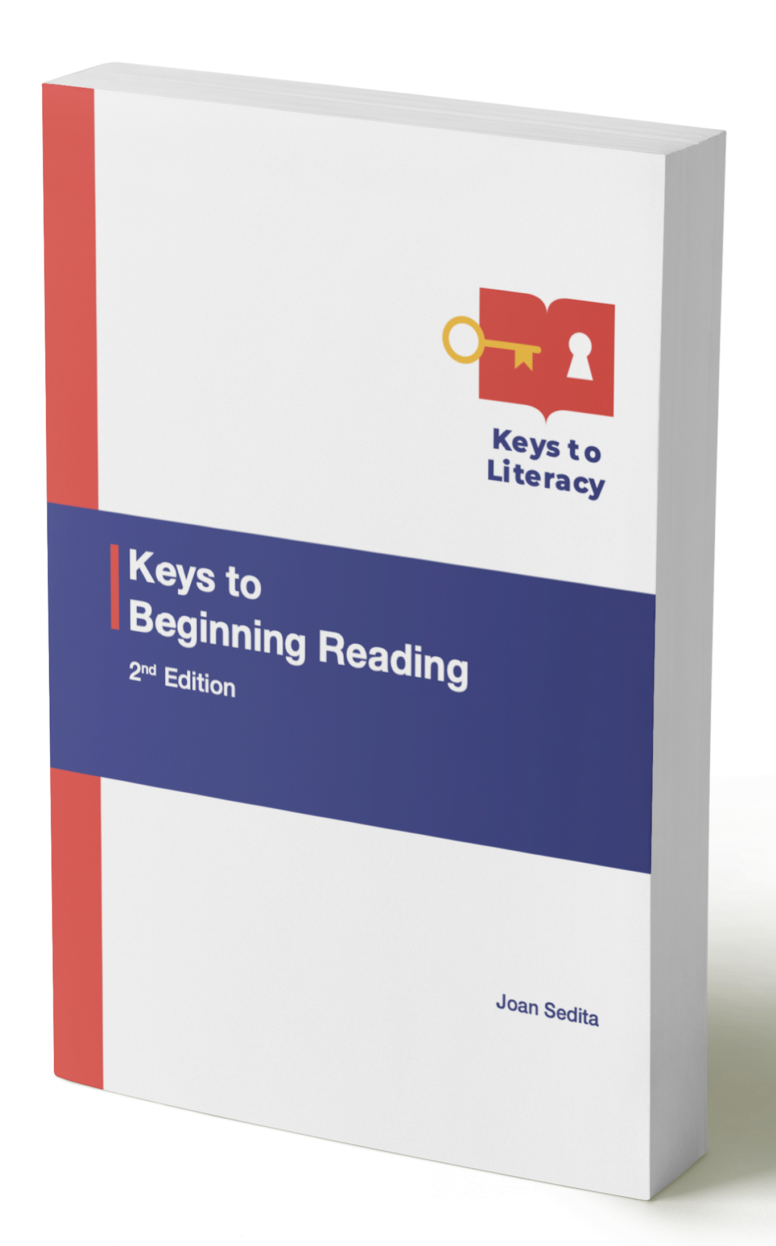 The second was the publication of the second edition of Keys to Beginning Reading (Sedita, 2025), which is increasingly being adopted as a required or supplemental textbook for higher education courses aligned with the Science of Reading (SOR). Together, these experiences highlighted both the tremendous progress many EPPs have made and the significant opportunities that remain as higher education works to prepare the next generation of literacy educators.
In this post, I summarize several of the key ideas from my keynote presentation, organized around three questions: Why are EPPs changing? What literacy knowledge should future teachers acquire? And How should teachers teach literacy effectively?
WHY: Current Trends
Educator Preparation Programs (EPPs) play a critical role in preparing teachers to deliver effective, evidence-based literacy instruction. Their responsibility extends beyond introducing research to helping future educators translate that research into effective classroom practice. This includes the growing body of evidence commonly referred to as the Science of Reading (SOR), as well as the complementary research base on writing instruction.
Several factors are driving EPPs to redesign their programs and coursework to better align with this evidence base:
- Persistent concerns about student literacy achievement. Many students continue to struggle to reach proficiency in reading and writing.
- Advances in literacy research. Decades of research in cognitive psychology, education, linguistics, and neuroscience have produced a substantial body of evidence about how reading and writing develop, why some students struggle, and which instructional approaches are most effective.
- Recognition that teacher knowledge matters. Teacher expertise has consistently been identified as one of the strongest school-based influences on students’ literacy achievement.
- Increasing expectations for EPPs. Colleges and universities are under growing pressure to ensure that teacher candidates graduate with the knowledge and skills necessary to provide evidence-based literacy instruction.
- State legislation aligned with the Science of Reading. Since 2013, dozens of states have enacted literacy legislation addressing reading instruction, teacher preparation, curriculum adoption, dyslexia screening, educator licensure, and professional development. Many of these laws include explicit requirements for EPPs.
- Changes to teacher licensure assessments. Many states are redesigning licensure exams to ensure that new teachers demonstrate knowledge of evidence-based literacy instruction before earning certification or recertification.
- Growing attention to dyslexia and reading difficulties. Increased awareness—and state legislation requiring educators to understand dyslexia, early warning signs, assessment, and intervention—is prompting EPPs to strengthen coursework in these areas.
- Growing attention to multilingual learners. As the multilingual learner population continues to grow, EPPs are increasingly expected to prepare teacher candidates who can simultaneously support language development and literacy development, even though this expectation is not always reflected in state legislation.
- Demand for stronger alignment between universities and schools. States and school districts increasingly expect beginning teachers to enter classrooms already familiar with the instructional approaches used in local schools, particularly the implementation of high-quality instructional materials (HQIM).
Examples of Literacy Legislation
As of fall 2025, 44 states plus Washington, D.C., had enacted reading legislation aimed at improving student literacy outcomes (Ellis et al., 2026). These laws commonly address preservice preparation, professional learning, high-quality instructional materials, job-embedded coaching, dyslexia, and third-grade reading proficiency. Many states include explicit requirements for Educator Preparation Programs. For example:
- Mississippi: One of the earliest states to enact comprehensive reading legislation (2013). Requires strong SOR licensure assessments, expects EPPs to align coursework with SOR, provides SOR professional learning for EPP faculty, and has expanded literacy initiatives into Grades 4–8.
- Tennessee: Requires literacy standards for EPPs, conducts state reviews of preparation programs, provides SOR professional learning for EPP faculty, and requires a rigorous licensure assessment.
- Utah: Requires EPPs to prepare teacher candidates to demonstrate specific competencies in evidence-based elementary literacy instruction.
- Colorado: One of the first states to pass legislation related to SOR; has requirements for literacy coursework within EPPs.
- Florida: Requires EPPs to prepare teacher candidates to deliver explicit, systematic, and sequential instruction in the five essential components of reading.
Are EPPs Responding to the Challenge?
There are many examples of EPPs that provide high-quality preservice preparation and graduate-level coursework aligned with current literacy research. Likewise, many colleges and universities are actively redesigning their programs to strengthen literacy instruction. However, a substantial number of EPPs have not yet fully aligned their coursework with the current evidence base.
The report The Role of Educator Preparation Programs in Preparing Teachers in the Science of Reading (American Association of Colleges for Teacher Education, Lane & Contesse, 2023) observes:
“The science of reading has garnered enormous attention among educators and the general public over the past few years. Numerous articles, podcasts, and other popular media posit that too many kids are failing to learn to read proficiently and that too many teachers lack the knowledge and skills to teach reading effectively… What is purported to be missing from teacher preparation programs is course content and practical experience in the science of reading.”
Similarly, the National Council on Teacher Quality (Ellis, 2026) review of teacher preparation programs found:
- “Despite progress, roughly half of teacher preparation programs still don’t fully align with scientifically based reading instruction.” (p. 5)
- “Programs provide little preparation in teaching reading to English learners, struggling readers, and speakers of English language varieties other than General American English.” (p. 10)
WHAT: What Literacy Skills Should Students Learn?
During my keynote presentation, I discussed the following topics, several of which are linked to previous blog posts or videos that provide additional information:
- Essential components of reading
- Foundational Science of Reading frameworks, including the Simple View of Reading and Scarborough’s Reading Rope
- Essential components of writing, including the Writing Rope Framework (book, webinar)
- Integrating reading and writing instruction
- An overview of adolescent literacy ( guide, book, webinar)
HOW: How Should Teachers Teach Literacy?
I also discussed instructional practices that translate research into classroom instruction, including:
- Evidence-based instructional principles, including explicit instruction and the Gradual Release of Responsibility model (“I Do, We Do, You Do”)
- Structured literacy instruction
- Effective use of high-quality instructional materials (HQIM)
- Multi-Tiered Systems of Support (MTSS)
Resources to Support EPPs
In addition to the resources listed at the end of this post, Educator Preparation Programs may benefit from partnering with Keys to Literacy (KTL) as they refine or redesign literacy coursework and programs. As a leading provider of literacy professional learning, KTL has worked with faculty from more than 30 EPPs, and more than 100 colleges and universities have adopted KTL’s books or online courses as required or supplemental instructional resources.
Professional Learning Books
The second edition of Keys to Beginning Reading is a 460-page, full-color textbook that addresses the topics typically included in Science of Reading-aligned coursework. Faculty may also incorporate KTL books and related courses focused on writing instruction (Keys to Early Writing and Keys to Content Writing) and adolescent literacy (Essentials of Adolescent Literacy).
Consulting Partnerships
KTL partners with undergraduate and graduate educator preparation programs to support textbook selection, curriculum review, course redesign, syllabus development, and the creation of new literacy courses to support participants in pre-service and literacy leadership programs. Our collaborative approach respects the academic expertise of university faculty while supporting their efforts to strengthen literacy instruction.
Related Resources
State Literacy Legislation Resources
- Science of Reading Legislation & Implementation Data Base, Council of Chief State School Officers
- Interactive State Map (2025), The Reading League
- The Reading Revolution: How States Are Scaling Literacy Reform, FutureEd (Olson, 2023)
- Reading Reform Across America: A Survey of State Legislation, Albert Shanker Institute (Neuman, S.B., Quintero, E., & Reist, K. 2023)
Educator Preparation Program Resources
- The Role of Educator Preparation Programs in Preparing Teachers in The Science of Reading, American Association of College for Teacher Education (Lane & Contesse, 2023)
- Reviews of Reading Instructional Materials Used by Teacher Preparation Programs (with comprehensive coverage of five reading components and assessment), National Council on Teacher Quality (NCTQ)
- Science of Reading and Structured Literacy Syllabi Refinement Tool (2022), Rhode Island Department of Education
- Science of Reading Professional Learning Rubric, ExcelinEd
- Integrating Reading Foundations: A Tool for College Instructors of Pre-Service Teachers (2021), (12 college course lessons that incorporate key information from the IES Elementary Reading Guide), Regional Educational Laboratory Southeast/Institute of Education Sciences
References
- Ellis, C., Noble, R., Drake, G., & Peske, H. (2026). Teacher prep review: Decoding progress in reading preparation. National Council on Teacher Quality.
- Lane, H., & Contesse, V. (2023). The role of educator preparation programs in preparing teachers in the science of reading. American Association of College for Teacher Education.
- Sedita, J. (2025) Keys to beginning reading (2nd ed). Keys to Literacy.
Joan Sedita
 Joan Sedita is the founder of Keys to Literacy and author of the Keys to Literacy professional development programs. She is an experienced educator, nationally recognized speaker and teacher trainer. She has worked for over 35 years in the literacy education field and has presented to thousands of teachers and related professionals at schools, colleges, clinics, and professional conferences.
Leave a Reply